
Don’t Become Obsolete—Embrace the Power of Integrated Systems
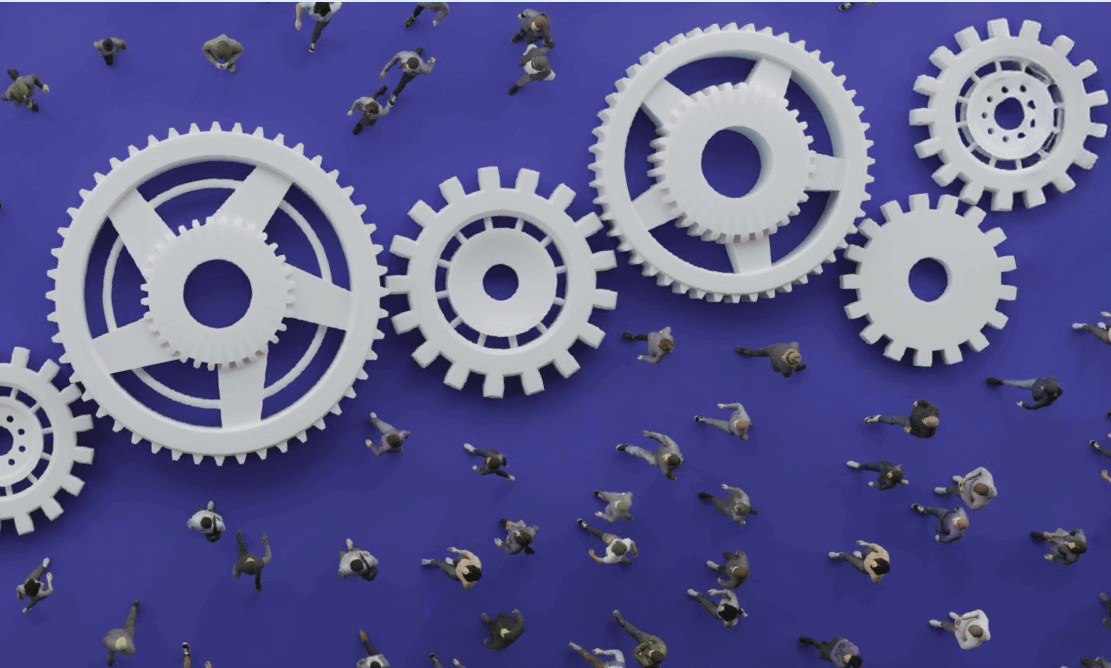
In today’s interconnected environment, organizations can no longer afford to view their core systems as separate entities. This is especially true in the field of human capital management (HCM). Integrated systems have transitioned from being a mere convenience to a critical competitive advantage. Companies that recognize and adapt to this reality will prosper, while those organizations that can’t or won’t adapt risk becoming obsolete.
During the early 20th century, a factory had machines for cutting, drilling, and assembling—each one operated manually, confined to its own silo. This type of operation resulted in slow, error-prone, and expensive production. The introduction of the assembly line marked a significant shift: a form of integration that transformed the industry.
Integration is the driving force behind industry modernization, business growth, and common progress. As technological advancements ramp up, organizations that neglect to integrate their systems face increasing risks; you either adapt, or you risk being left behind.
The Advance of Integration
The concept of integration has existed in various forms for centuries. The steam-powered factories of the Industrial Revolution serve as an early example of combining human labor with mechanical power. However, the modern-day understanding of integrated information systems began to take shape in the mid-20th century.
During the 1960s and 70s, companies began implementing mainframe-based systems for payroll, inventory, and accounting. Yet, these systems remained largely disconnected. As a 1970 IBM advertisement stated, “A computer on every desk won’t help if the computers don’t communicate with one another.”
By the 1980s and 90s, enterprise resource planning (ERP) systems, such as SAP and Oracle, wanted to consolidate these silos into cohesive, integrated platforms that facilitated data sharing across departments. This development has continued with the advent of application programming interfaces (APIs), cloud solutions, and now artificial intelligence (AI)-driven systems that enable even more profound, real-time integration across tools and business processes.
The 21st century witnessed a transformation in cloud computing that altered the landscape entirely. Companies such as Workday, SAP SuccessFactors, and Oracle HCM Cloud have redefined the concept of integration, focusing on user-friendly, employee-centric designs and reduced initial costs. They have unified core HR, payroll, talent management, learning, time tracking, and analytics into cohesive suites that are accessible from anywhere.
Integration Benefits
Human resources (HR) has evolved from a mere administrative function to a strategic ally. Optimizing workforce planning is impossible if headcount data is stored in one system, compensation in another, and turnover metrics in yet another. An integrated HCM system provides the following:
- A single source of truth—Eliminates the need to reconcile conflicting spreadsheets or systems
- Real-time insights—Executives and HR leaders can instantly observe workforce trends
- Enhanced employee experience—Employees can manage their benefits, time, learning, and career objectives all in one location
- Operational efficiency—Automated workflows minimize errors and allow payroll teams to focus on strategic initiatives
Fragmentation Detriments
While integrated HCM systems offer strategic advantages, fragmented systems pose risks like the following:- Compliance issues arising from data updates failing to synchronize
- Poor employee experiences when staff must deal with multiple logins or redundant updates
- Inefficient operations resulting from unnecessary data entry and preventable mistakes
- Limited visibility into workforce costs, hindering budgeting and agility
Integration Success Stories
As Satya Nadella from Microsoft stated, “Every company is a software company. You have to start thinking and operating like a digital company.”
This is very relevant in the realm of people management. If your competitors have consolidated and integrated data regarding talent, skills, and labor costs, they will have the upper hand over you.
Consider this, for example:
In the 1970s, Fred Smith of FedEx had a straightforward vision: to deliver packages overnight with reliability. However, what truly set FedEx apart was not merely the use of airplanes—it was their comprehensive tracking system. Customers were able to track their packages at every stage, years ahead of competitors who provided similar services. It was not just about logistics; it was the integration of information that fostered trust.
Alternatively, look at a multinational retailer that transitioned from five distinct HR systems across various regions to a unified global HCM suite. In the past, each country’s team operated its own system, adhering to local compliance regulations and reporting formats. Consolidating headcount reports for headquarters took an inordinate amount of time. Post integration, global headcount reporting could now be completed in days, payroll errors decreased by 75%, and employee engagement scores improved due to uniform self-service tools.
The Integration Age Is Here
Integration is no longer a luxury. It has become a necessity, driven by leadership seeking insights and employees desiring consumer-grade technology in the workplace. The decision is clear. Adopt integration and harness strategic value from your workforce data or hold onto fragmented systems and observe as competitors make quicker, more informed decisions.
Integrated HCM systems represent the strength of cohesive data and smooth workflows. Their evolution paints a picture of an unavoidable shift towards dismantling silos. Today, organizations face the choice of taking the lead by embracing integration or being left behind and becoming obsolete.For more articles like this, read PAYTECH magazine (available in both printed and digital formats), free for PayrollOrg members!
Ginnette Clark, CPP, is the Manager, Total Rewards NAM for Hiab USA Inc. and is PayrollOrg’s President. She is a member of PayrollOrg’s Board of Contributing Writers.
